A gift
My brother got married recently and I made a gift for him and his wife.
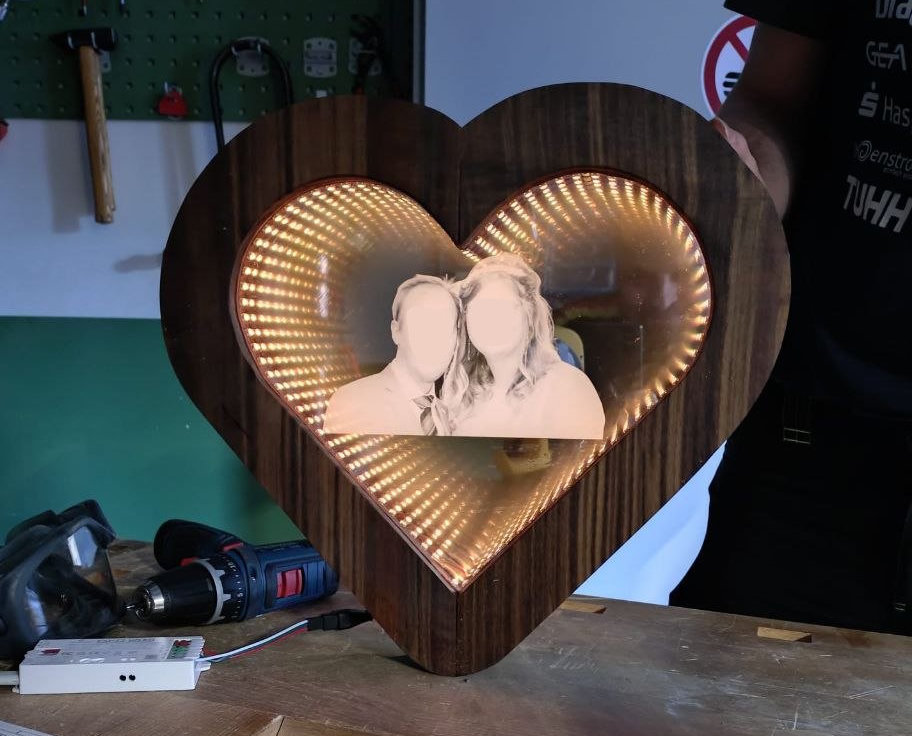
I taught myself many new skills along the way, doing all the woodworking myself. However, I couldn’t have done it without the kind advice from the people at my university’s working lab/maker space. Considering I haven’t done anything with wood since I was cutting animal shapes out of MDF with a Laubsäge in middle school, I’m really happy with the end result. It ended up pretty much exactly like I had envisioned it when starting the project and the gift was well received. I also had lots of fun making it, wouldn’t mind doing more projects like this in the future.
Details
- It’s a heart-shaped infinity mirror made from two laser cut acrylic plates with a portrait engraved in the front plate. Each plate has a semi-transparent mirror film applied on the inside surface.
- The two plates are held together by a hefty frame cut from a large plank of dark walnut wood.
- A high-density LED strip (WS2812B) runs in the gap between the two acrylic plates generating the light for the infinity mirror. It is driven by a WLED based controller embedded on the backside. I chose a controller that could be powered by USB so I could run it off a USB power bank to light up when being unwrapped. For a permanent installation, they can use a USB power supply or anything with a compatible barrel plug.
Some things I learned
- The semi-transparent mirror film (originally sold to shield windows from heat and prying eyes) I used is a pain to work with. Even when following the instructions, applying it “wet” and pushing the liquid out the sides with a scraper is really hard to do well. Leveling up to impossible once you try to apply it to a non-flat surface like the laser engraved surface on my piece. The liquid would collect in the engraving and then slowly work its way between the flat piece and the film. In the end, I had to apply it dry using a rolling pin to prevent most of the bubbling, then peeled it back up on each of the three corners, making sure not to reveal the engraved area and then reapplied the flaps with the liquid method.
- Turns out hardwood (walnut in this case) is hard actually, that poor little jigsaw… I might use a band saw next time, I was just scared of accidentally cutting into the workpiece, especially on the inside cuts.
- Think about assembly when planning. I had originally planned to cut a thin slot for each of the acrylic panels and thus clamp them in between the two wooden wing pieces. But then I realized that I wouldn’t be able to apply the LED strip if both panels are installed. Since the strip goes all the way around, the wood pieces would have to be joined already before I can apply the lights. So I had to change plans and cut one thin slot and a large rabbet on the other side. Then I was able to clamp the front panel between the wood pieces, glue in the LED strip and then insert the rear panel from the back.
Insert “doch lieber was mit Holz” joke here.
More pictures
-
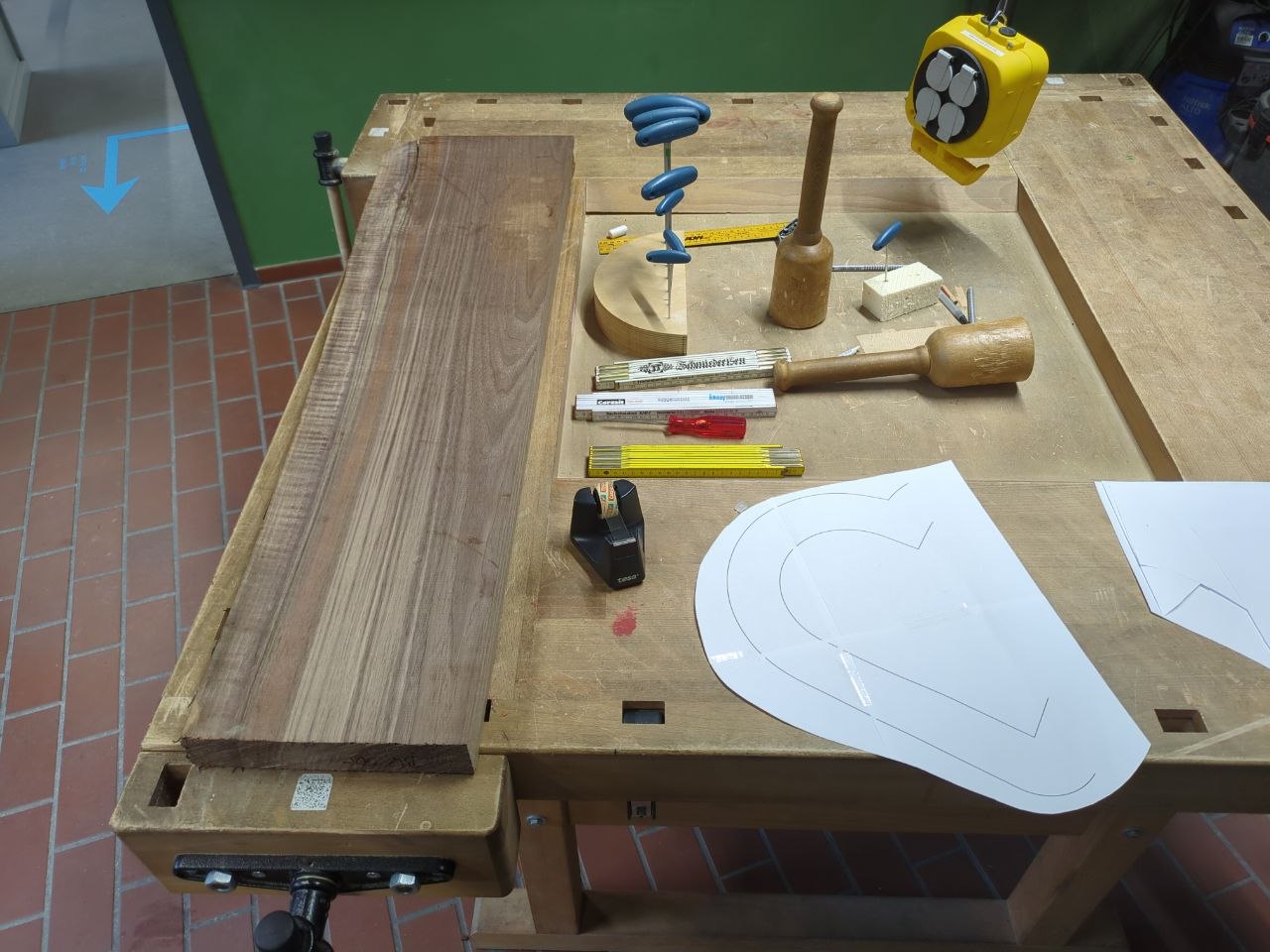 The frame is cut from this piece of walnut which I bought at a lumber store.
-
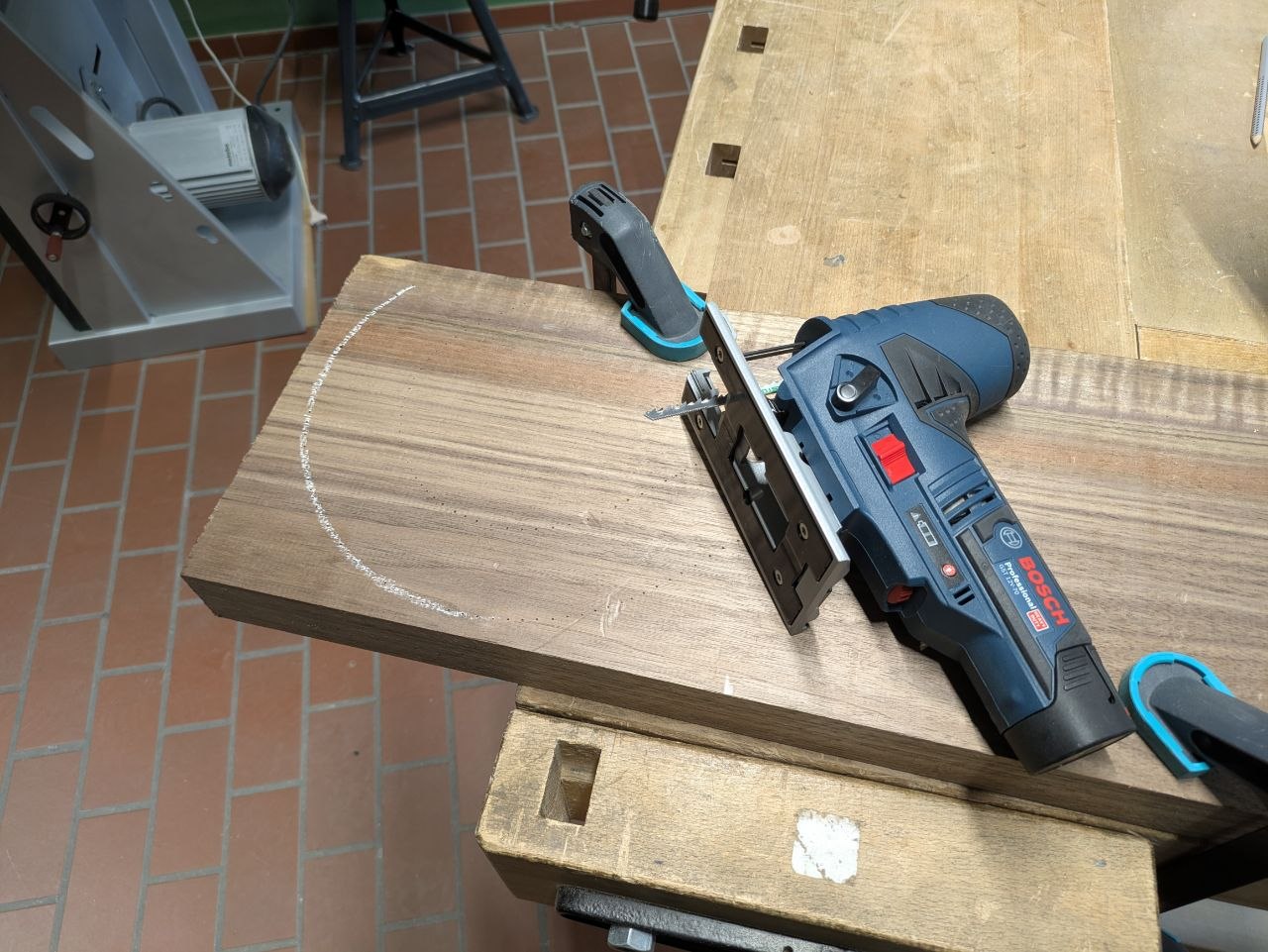 After transfering the template to the wood, I used a jigsaw to cut the outer shape.
-
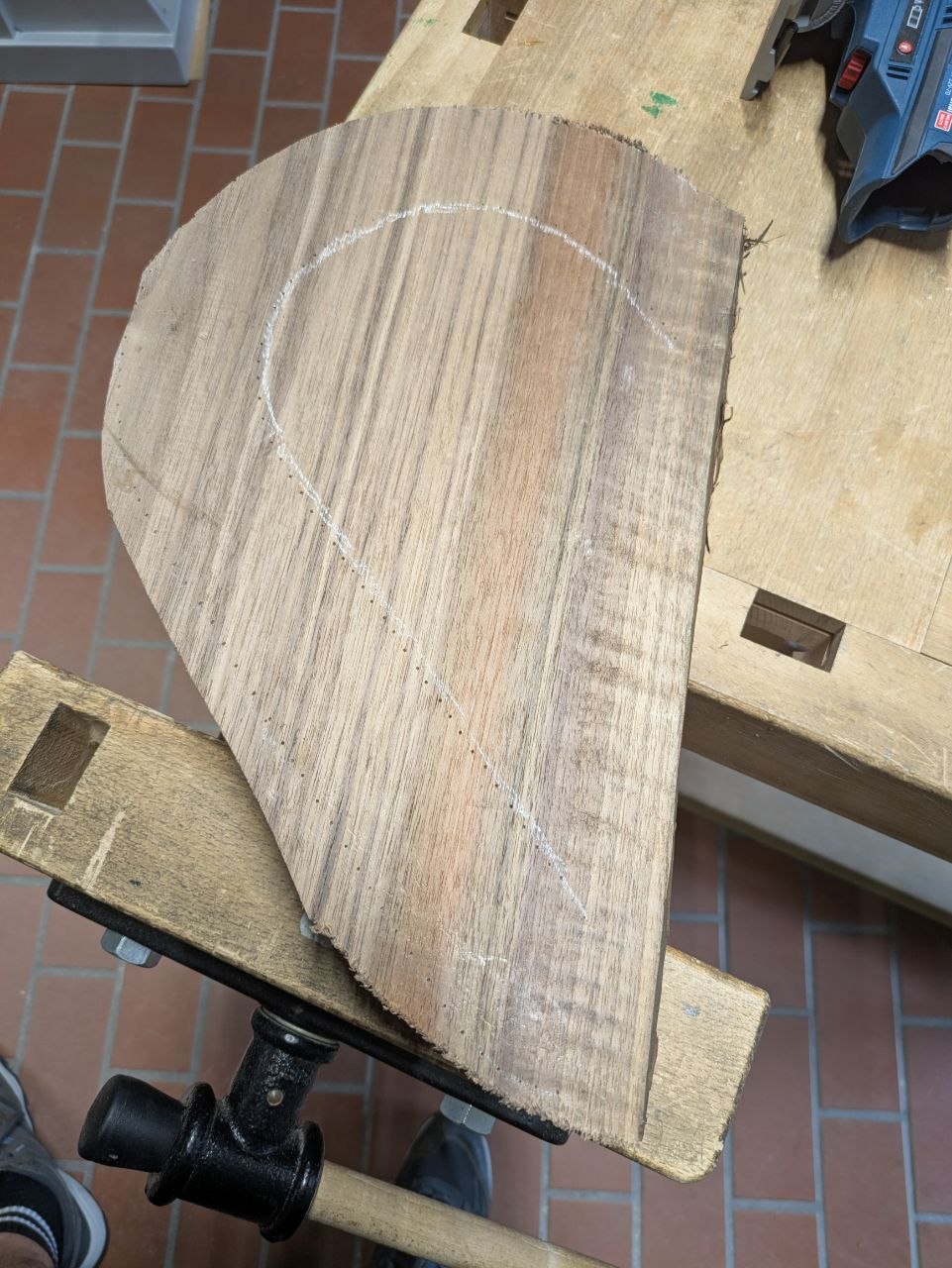 I didn't know how hard controlling the saw would be, so I cut further away from the template initially.
-
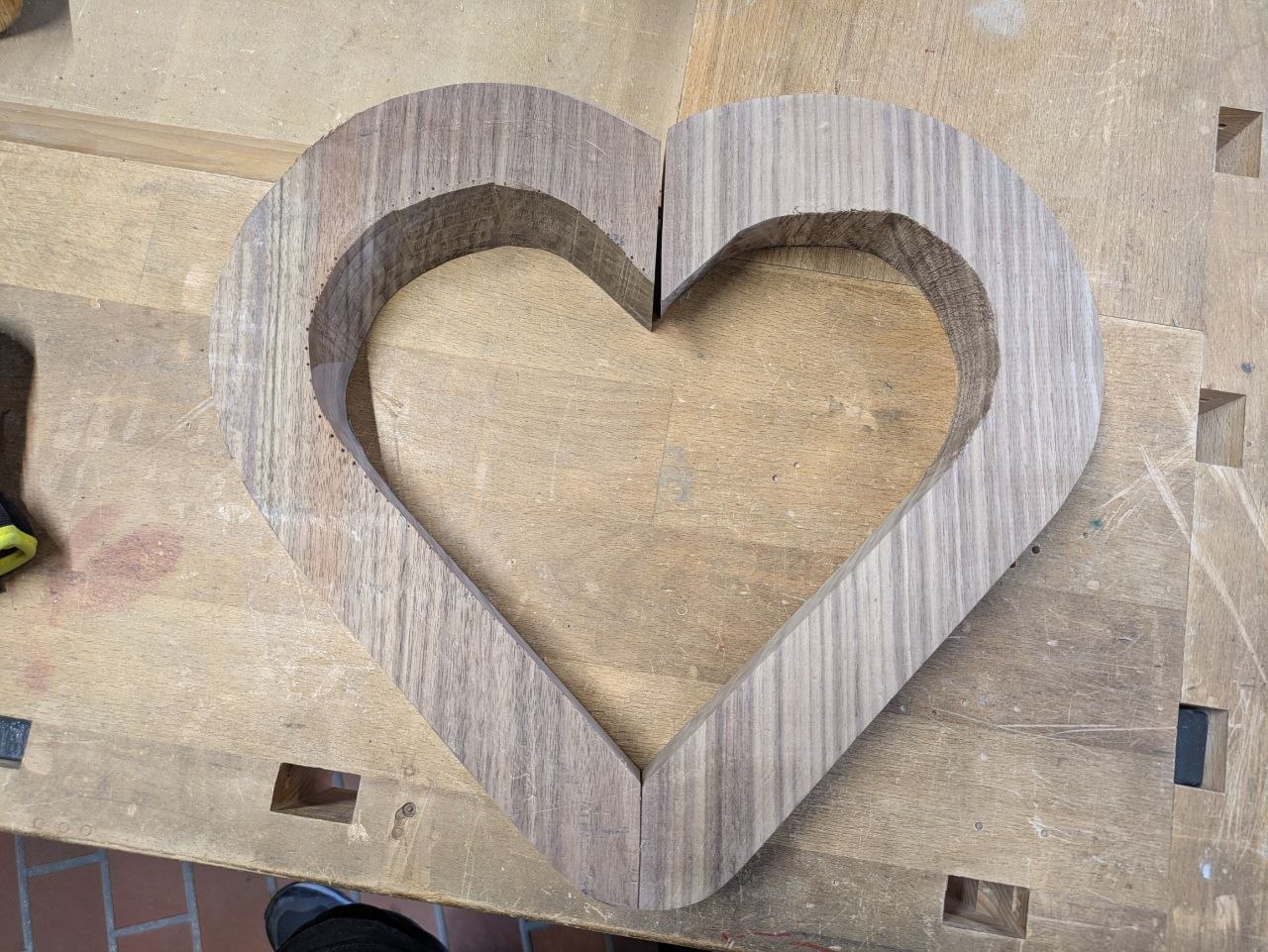 The wings are still very rough here. The jigsaw does not cut straight down, especially in curves. Nothing a belt sander can't fix though...
-
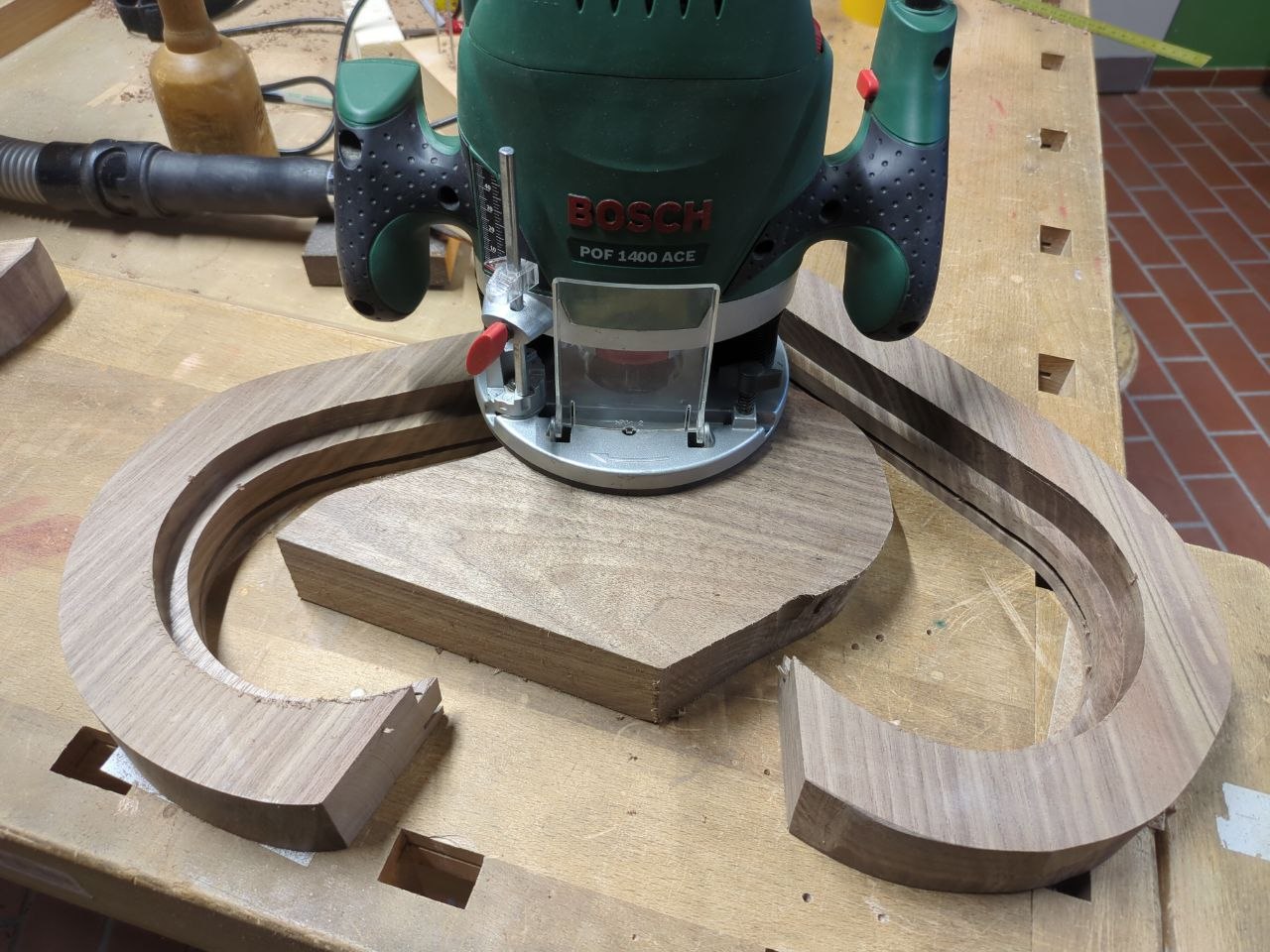 Cutting slit and rabbet for the mirrors, using one of the inner cutaways for support.
-
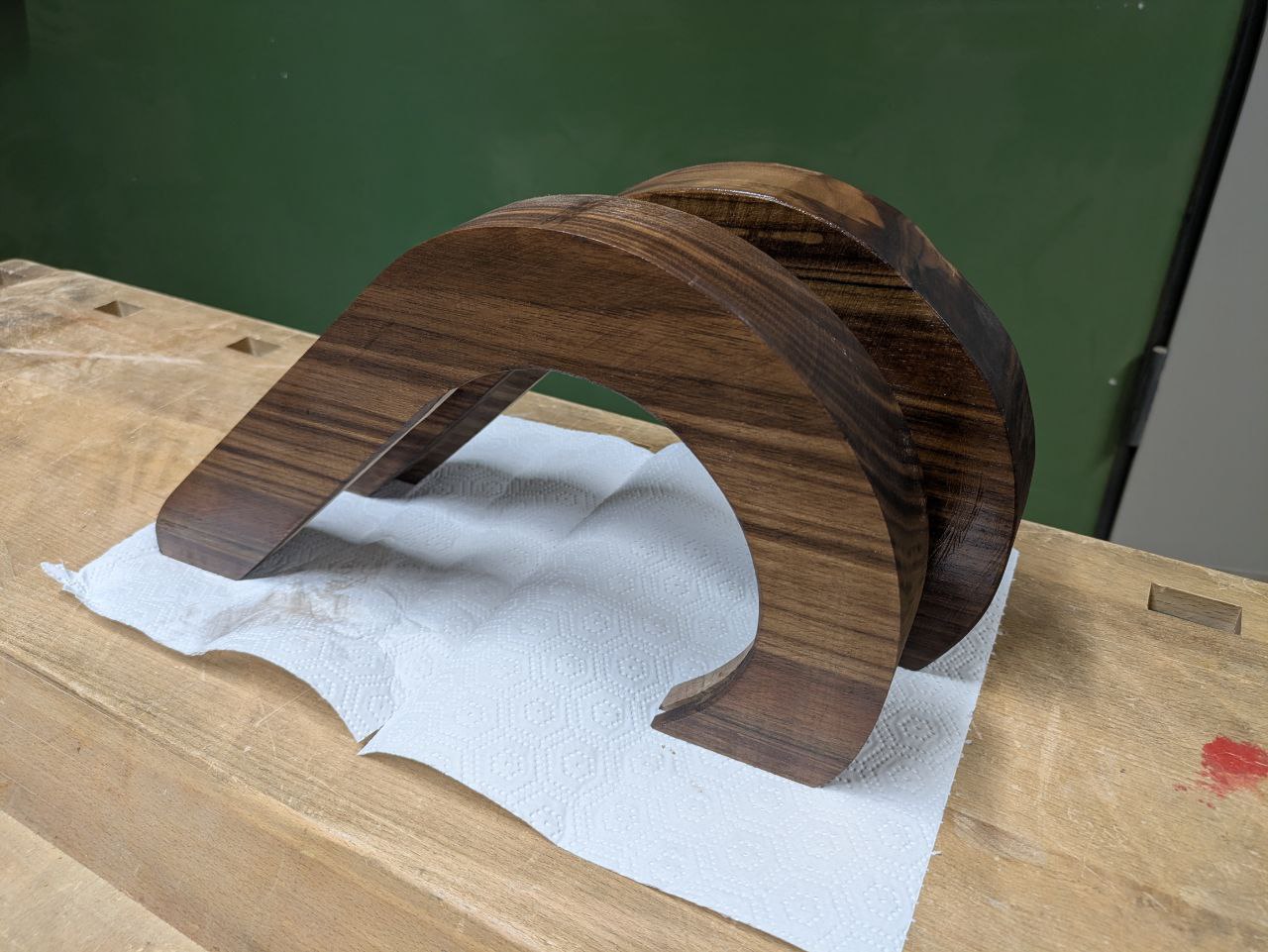 I let the two wings stain overnight; An exciting first glimpse at the final color.
-
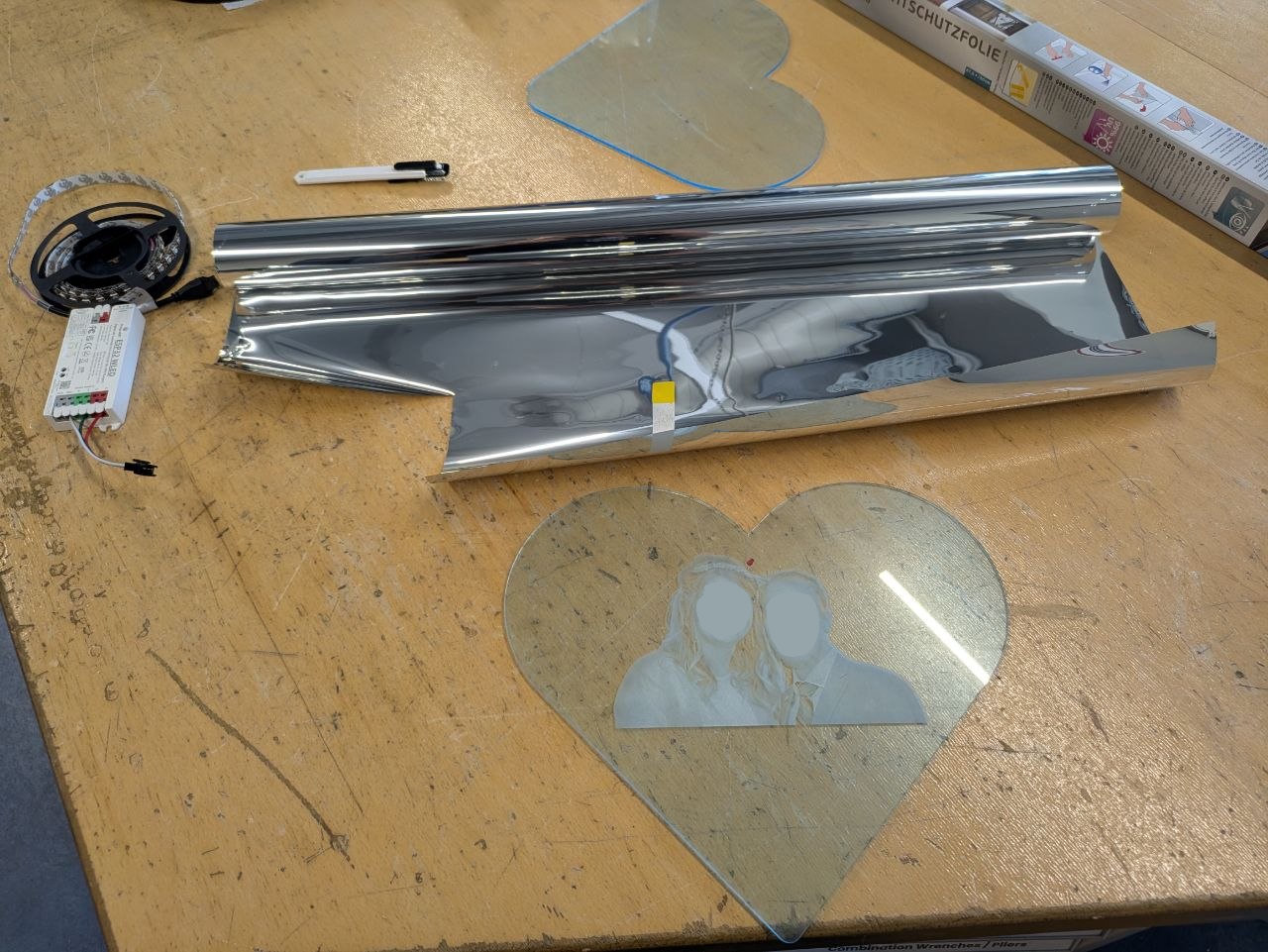 Applying the mirror film was a major pain point, especially on the engraved panel.
-
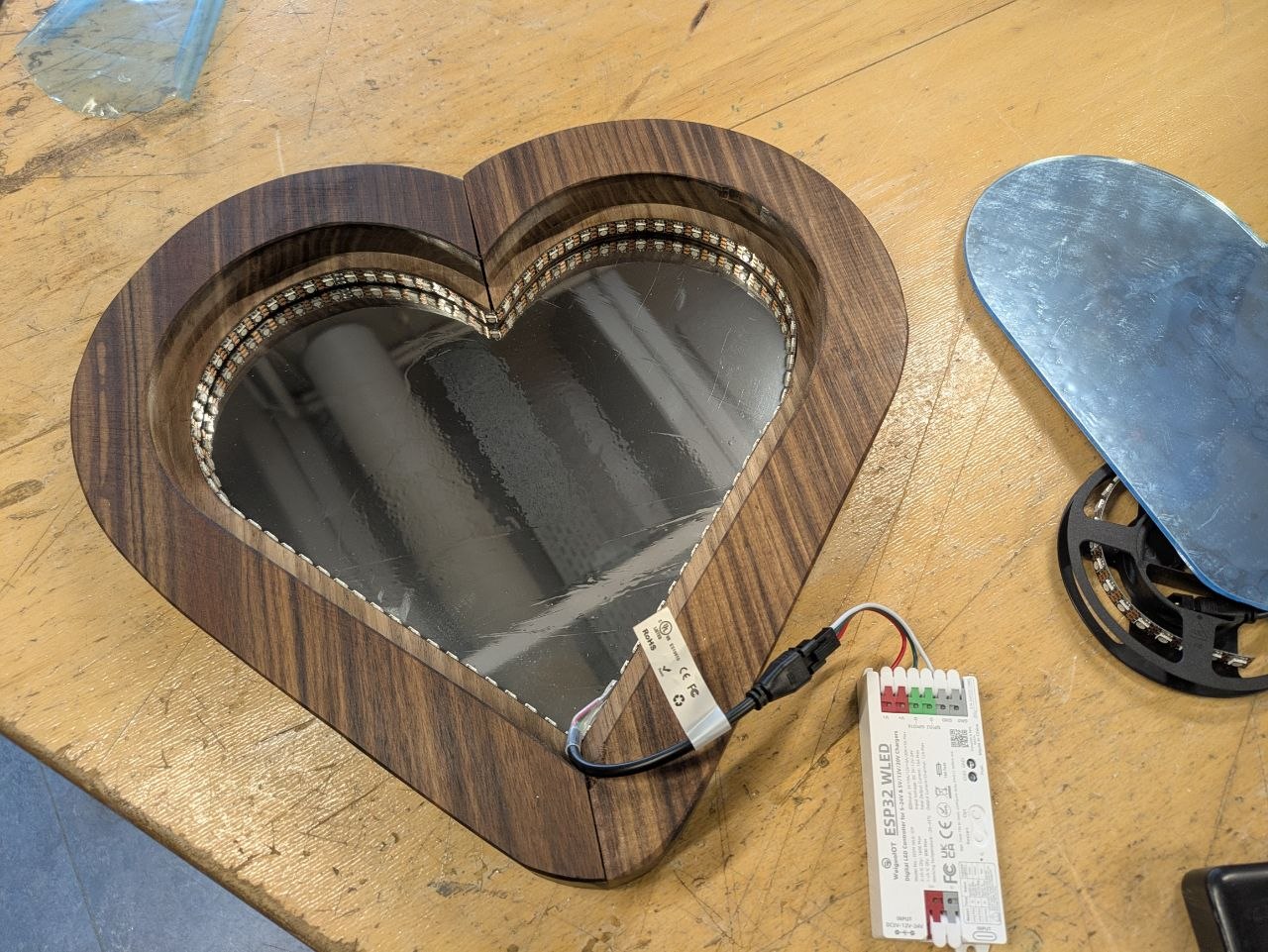 The LED strip connects both halves and thus can only be applied after the front mirror is installed.
-
The final result after ~30 hours of work. <3
-
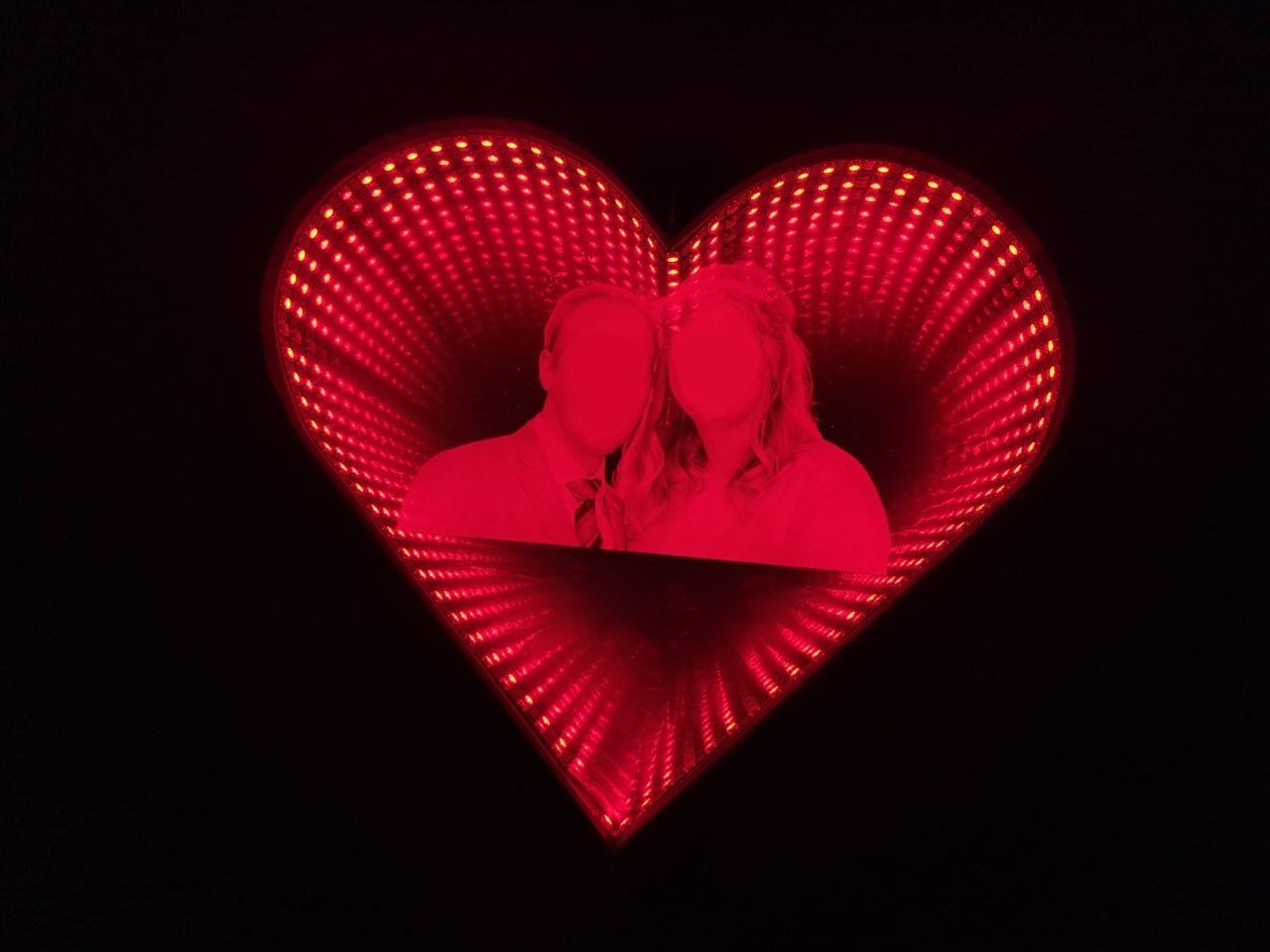 Looks nice in the dark too. The dimmer LEDs are not broken but caused by a blinking effect from the LED controller.